

Support Your Movement With Kinesio Taping in Coquitlam
Whether you're a high school athlete returning from a strain, an active adult managing a nagging joint, or someone looking to stay on the field or court through discomfort, kinesio taping in Coquitlam, British Columbia, can offer targeted support that works with your body — not against it.
What Is Kinesio Taping and How Can It Support Your Recovery?


Kinesio taping is a therapeutic method that applies a flexible, elastic tape directly to the skin to provide gentle, movement-friendly support to muscles and joints. Unlike rigid strapping tape, kinesiology tape is designed to stretch and recoil in a way that mirrors your own skin, allowing you to continue moving freely while still receiving tactile feedback about how your body is positioned and loaded.
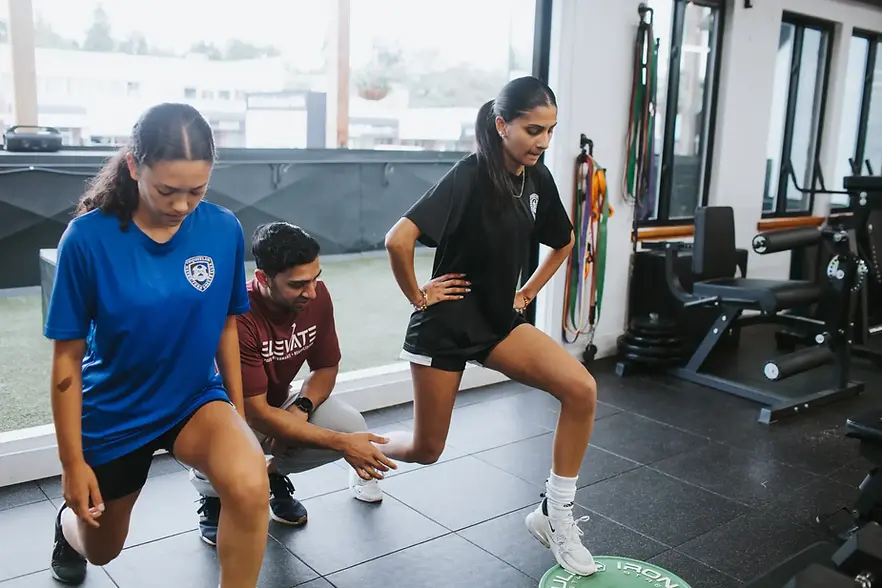
At ELEVATE Sports Performance + Rehab in Coquitlam, kinesio taping is used as one component within a broader, individualized rehabilitation and performance plan. Practitioner Jayten Patel works closely with athletes, active youth, and their families across the Tri-Cities — including Coquitlam, Port Coquitlam, and Port Moody — to determine when and how taping fits into your overall recovery journey.
Kinesiology tape can help improve your body's awareness of joint position, reduce discomfort during movement, and support tissue through the early and mid-stages of recovery — making it a practical addition to care plans for high school athletes and active individuals who cannot afford to stop moving entirely.
Conditions Kinesio Taping Can Help With
Kinesio taping is versatile enough to be applied to a wide range of musculoskeletal conditions, from acute sports injuries to ongoing postural concerns. At ELEVATE Sports Performance + Rehab in Coquitlam, your practitioner will assess your presentation and determine whether kinesiology tape is a useful addition to your current treatment plan or whether other approaches should take priority first.
Conditions that may be supported with kinesio taping include:
Sports injuries and overuse strains — athletes in soccer, basketball, football, ice hockey, and lacrosse commonly experience repetitive load injuries where taping provides comfort during a gradual return to play.
Postural strain from training or daily demands — young athletes managing heavy training loads alongside school schedules may develop postural habits that taping can help address alongside corrective exercise.
Ligament sprains and joint instability — gentle external support from kinesiology tape can be particularly helpful after ankle, knee, or shoulder sprains when the area is still sensitive but movement is encouraged.
Muscle strains and movement imbalances — tape applied along specific muscle groups can help cue more efficient activation patterns, supporting your rehab exercises.
Post-injury swelling or tissue sensitivity — when clinically appropriate, kinesio taping techniques may assist with circulation and tissue comfort following injury.
Taping is rarely used in isolation. Your practitioner will combine it with exercise programming, strength work, or hands-on therapy to address the underlying cause of your symptoms rather than simply managing them on the surface.
How Does Kinesio Taping Work for Your Muscles and Joints?
Kinesiology tape has a unique elastic structure that, when applied to the skin under specific tension and direction, creates a subtle mechanical interaction with the underlying tissues. This gentle lifting effect may help reduce pressure on pain receptors, improve local circulation, and enhance the feedback your nervous system receives about how a joint or limb is moving — a quality known as proprioception.
Improved proprioceptive feedback can be particularly meaningful for youth athletes returning from injury. When an ankle, knee, or shoulder has been strained, the sensory pathways that tell the brain about joint position can be temporarily disrupted. Kinesio tape may help reinforce those signals during the recovery period, supporting more confident and coordinated movement on the field or court.
At ELEVATE Sports Performance + Rehab, taping is always selected and applied based on a structured assessment. Jayten Patel will identify the most relevant areas to tape, the appropriate technique for your condition, and the tension and direction that align with your movement goals — whether that's returning to a high school soccer game, managing shoulder discomfort during basketball, or building load tolerance in training.
Kinesio taping integrates seamlessly with the active rehabilitation, manual therapy, and performance programming offered at ELEVATE, making it a practical option at various stages of an athlete's recovery process.

Who Provides Kinesio Taping at ELEVATE Sports Performance + Rehab?


Kinesio taping at ELEVATE Sports Performance + Rehab in Coquitlam is provided by Jayten Patel, a regulated rehabilitation professional who works primarily with active youth and young athletes across the Tri-Cities area. Jayten has developed a focused practice around helping athletes aged 13 to 18 who are navigating sports injuries, managing pain during training, or working through the performance and rehabilitation gap that often follows an injury.
Parents who enroll their children in competitive soccer, basketball, football, ice hockey, lacrosse, and other high-level sports are often looking for care that goes beyond passive treatment. At ELEVATE, kinesio taping is offered as part of a larger plan that may include exercise therapy, return-to-sport programming, and hands-on rehabilitation techniques — giving young athletes the support they need to continue playing with confidence.
Before any taping is applied, Jayten will complete a thorough movement and injury assessment to confirm that kinesiology tape is appropriate for your athlete's current condition and to determine the most effective application for their goals. Families from Coquitlam, Port Coquitlam, Port Moody, and the broader Tri-Cities region are welcome at ELEVATE.
What to Expect at Your Kinesio Taping Appointment
1
Assessment
Your appointment begins with a conversation about your injury history, current symptoms, and activity demands. Jayten will perform a focused physical assessment of the area to determine whether taping is indicated and how to apply it most effectively.
2
Application
The skin will be prepared and kinesiology tape applied in specific directions and tensions based on your assessment findings. You may be asked to perform a few movements after application to confirm the tape feels supportive and comfortable.
3
Education & Plan
You will receive clear instructions on how long to wear the tape, how to care for it during sport, showers, or activity, and how to monitor for any skin sensitivity. Additional sessions and complementary therapies may be recommended as part of your progressive recovery plan.
Kinesio taping appointments at ELEVATE are rarely standalone visits. Most athletes will also be working through an active rehabilitation or return-to-sport program, and taping may be re-applied or adjusted as their condition evolves over several weeks of progressive loading and training.

Frequently Asked Questions About Kinesio Taping in Coquitlam

Book Your Kinesio Taping Assessment in Coquitlam
If your athlete is managing a sports injury, dealing with joint discomfort, or needs additional support to train and compete with more confidence, kinesio taping may be a valuable part of their rehabilitation plan. Reach out to ELEVATE Sports Performance + Rehab in Coquitlam to book an assessment with Jayten Patel, or contact our clinic to discuss whether kinesiology taping is right for your situation.